Some HCPs use the legal system the way it was designed to be used: as a forum for resolving genuine disputes. Most do not. For many high-conflict personalities, the legal system itself is the weapon — a vehicle for control, harassment, financial exhaustion, and psychological warfare extended indefinitely beyond any rational stopping point.
Recognizing this pattern, naming it, and learning the tools that exist to counter it is one of the most important things a protective parent can do early in a contested case.
What weaponized litigation looks like
The pattern has a recognizable signature. None of these moves, taken in isolation, is necessarily abusive. The pattern of all of them, sustained over time, almost always is.
Filing motions for the sake of filing motions
Routine matters that could be handled in a phone call between attorneys become formal motions. Motions to clarify clear orders. Motions to compel things that have already been produced. Motions to modify schedules over trivial accommodations. The point is not to win the motion. The point is to make you respond to it — on your dime, on your time, on your stress budget.
Endless discovery
Discovery requests that are overly broad, irrelevant, or designed to invade your privacy and your support network. Subpoenas to your therapist, your employer, your friends, your new partner. Document requests that produce thousands of pages of busywork. The goal is to make litigation prohibitively expensive for you while extracting information they can use against you elsewhere.
Repeated continuances and delays
The hearing keeps getting postponed. Witnesses become unavailable. New attorneys substitute in and need time to get up to speed. Each delay extends the period during which whatever interim arrangement is in place — usually the one that benefits the high-conflict parent — remains the status quo.
Frivolous appeals and modifications
Every adverse ruling is appealed. Every settled matter is reopened. Every modification of circumstance, no matter how minor, becomes the basis for a new petition. The case never ends because the high-conflict parent will not let it end.
Strategic lawyer changes
Counsel changes every few months, usually right before a key hearing. Each new lawyer needs time to come up to speed. Each transition produces continuances. Some HCPs cycle through five or six attorneys in the course of a single case.
False or inflated emergency motions
Emergency motions that are not genuine emergencies — designed to force you into a courthouse on short notice for matters that could have waited for a regular hearing. Often filed late on a Friday so you have to scramble over the weekend.
Why this is hard to counter
The fundamental asymmetry of weaponized litigation is that filing is cheap and responding is expensive. The high-conflict parent — especially one with financial resources or pro bono assistance — can keep the case in motion at low cost to themselves while imposing significant costs on you. Each individual motion is "just one more thing to deal with." Cumulatively, they constitute a coordinated campaign of attrition.
Compounding this: the legal system is designed to err on the side of allowing parties to be heard. Judges are reluctant to shut down filings, even obviously frivolous ones, because doing so risks denying due process. This default favors the weaponizer.
The legal tools that exist
The good news is that family courts have seen weaponized litigation many times, and there are mechanisms specifically designed to address it. They require evidence, patience, and an attorney willing to invoke them — but they exist.
Sanctions for frivolous filings
Most jurisdictions have rules permitting the court to sanction a party (or their attorney) for filings that are without basis in law or fact, or that are filed for an improper purpose like harassment. Sanctions can include payment of the other side's attorney fees. A pattern of sanctioned filings, in turn, becomes evidence of bad faith.
Vexatious litigant designations
Many jurisdictions have procedures for declaring a party a "vexatious litigant," which restricts their ability to file new actions or motions without prior court approval. The bar is high — usually requiring a documented history of meritless filings — but in chronic cases, it can be transformative.
Protective orders limiting discovery
If discovery requests are abusive, your attorney can move for a protective order limiting them. Courts will sometimes restrict discovery that is overbroad, unduly burdensome, or designed to harass.
Attorney fee awards
In many cases, courts can award attorney fees to the party who has been forced to defend against meritless filings. This both compensates you and creates a financial deterrent for the other side.
Case management orders
In high-conflict cases, courts can sometimes be persuaded to enter case management orders that restrict the manner of communication, limit the number of motions per period, require pre-filing conferences, or otherwise structure the litigation to reduce abuse.
The strategic posture
Counter-strategy is not just about invoking the right tools at the right moment. It's about positioning yourself, over time, as the reasonable party in a case where the other side has demonstrably made the litigation itself the weapon.
Document the pattern
Maintain a chronological list of every motion filed, every continuance requested, every discovery request served, every attorney change. The individual data points are unimpressive. The cumulative pattern, well-organized, is damning.
Respond proportionately
Resist the temptation to match motion-for-motion. Your attorney's job is to respond efficiently to what genuinely requires response, while building the record that the other side's filings are increasingly disconnected from any substantive issue.
Conserve resources
Weaponized litigation is designed to exhaust you. The protective parent who runs out of money, energy, or attention before the case resolves loses by default. Conserve aggressively. Choose your fights deliberately. Save your resources for the moments that actually move the needle.
Make the meta-case
At some point in chronic high-conflict litigation, the most important argument is no longer about any particular filing. It's about the pattern of filings. Naming the pattern, documenting it patiently, and inviting the court to see it for what it is — that is often the move that finally shifts the case.
The long view
Weaponized litigation runs on the assumption that you will eventually break — financially, emotionally, or both — and accept whatever terms the other side has been pushing. The protective parent who plans for the long run, conserves resources deliberately, and builds the record patiently is the parent for whom that strategy fails.
This is not a sprint. It is not a single battle. It is, frequently, a multi-year campaign against an opponent who has unlimited tolerance for the conflict itself. The parents who prevail are the ones who internalize that early and structure their lives accordingly.
Want the full playbook?
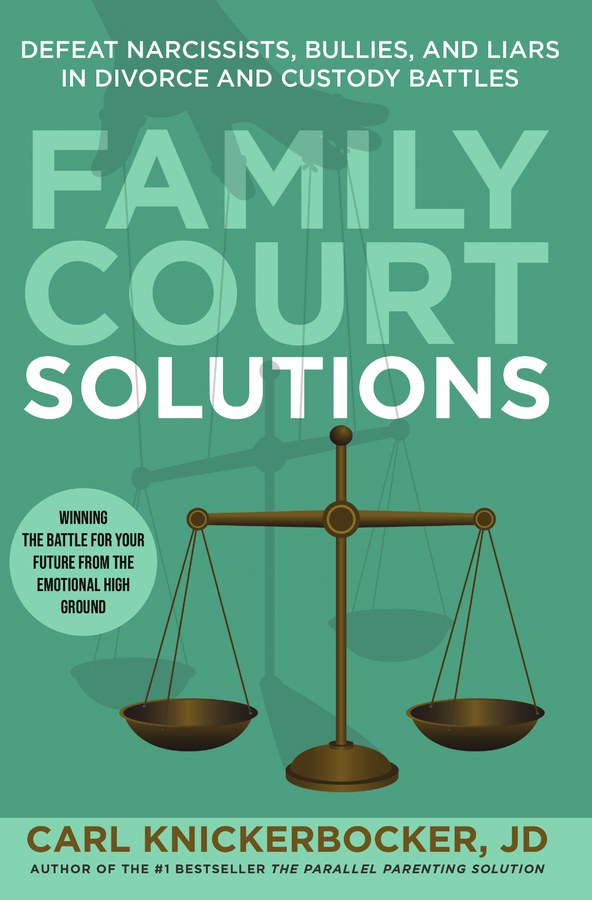
This article is adapted from Family Court Solutions by Carl Knickerbocker, JD — the therapist-recommended, attorney-written guide to defeating narcissists, bullies, and liars in divorce and custody battles.
Get the Book