"Integrity" sounds like a virtue. In high-conflict family law, it's also — and primarily — a strategy. It may be the single most underrated source of leverage available to a protective parent in a contested case.
That claim is counterintuitive, because integrity is usually framed as a moral concession. The HCP fights dirty. You don't fight dirty. They get an advantage. You don't. The math of that exchange seems to favor the dirty fighter every time.
Except it doesn't. Not in the system as it actually operates. Not in front of the people who actually decide custody cases. The math runs the opposite way, for reasons that take a moment to lay out properly.
What integrity means here
Integrity in high-conflict family court is not an abstract moral commitment. It's a specific operational stance with a few concrete components:
- You comply with court orders, even the ones that benefit the other side.
- You communicate truthfully, including about facts that don't help you.
- You do not retaliate. You do not match the other side's behavior.
- You document thoroughly, in real time, including things that don't necessarily help your narrative.
- You center the children's interests, including when those interests conflict with your tactical preferences.
- You do not engage in the smear campaigns, the recordings of the kids, the social-media skirmishes, the third-party manipulation.
This is harder than it sounds. The temptation to match the other side's tactics is constant. Every escalation by them produces an opportunity to escalate back. Every lie produces an opportunity to retaliate with a more strategic lie of your own. Every manipulation produces a chance to manipulate in return.
Don't.
Why integrity is leverage, mechanically
Several distinct mechanisms work in your favor when you maintain integrity in high-conflict litigation.
Judges and evaluators are pattern recognition machines
Family court judges and custody evaluators have seen many high-conflict cases. Many. They recognize the dynamics quickly — often within the first hearing or two — even when they don't say so out loud. The protective parent whose conduct, documentation, and demeanor are consistently aligned across months is, to a trained observer, a different category of party than the parent whose story is constantly shifting and whose conduct keeps producing new motions.
You don't have to convince the judge of this. You have to give the judge enough consistent data to recognize the pattern themselves.
Credibility compounds
Every truthful statement you make adds to the bank. Every documented fact that holds up under scrutiny adds to the bank. Every prediction you make about the other side's conduct that comes true adds to the bank. By the time the case reaches a decisional moment — an evidentiary hearing, a custody decision, a property division — one parent has accumulated credibility and the other has burned it.
That bank is what the close calls get decided on.
The HCP's tactics, against an integrity baseline, look worse
An HCP's manipulative behavior, viewed in isolation, can be ambiguous. The same behavior, viewed against months of contrastingly stable, calm, child-focused conduct from the other parent, looks unambiguous. You don't have to make the contrast explicit. The contrast makes itself, as long as you stay disciplined.
You do not generate ammunition for the other side
Every dirty move you make becomes an exhibit. Every retaliatory text. Every social-media post. Every recording of the children. Every conversation with a mutual friend that gets repeated. The HCP is collecting your missteps the same way you are collecting theirs — and a single significant misstep on your side can erase months of patient work on the rest of the case. Integrity is, among other things, the discipline of not handing them ammunition.
You stay legal
A surprising number of protective parents, in moments of desperation, do something that crosses a legal line — an illegal recording, a violation of a court order, an interference with custody. The short-term satisfaction is enormous. The case-level cost is catastrophic. Integrity, in part, is the discipline of declining short-term satisfactions that have long-term costs.
Integrity is not naivete
The version of integrity being recommended here is not the doormat version. It is not "rise above it" platitudes. It is not assuming the best about people who have given you no reason to assume the best.
Integrity in high-conflict family law is fully compatible with:
- Aggressive, well-prepared legal advocacy
- Thorough cross-examination of the other side
- Pursuing every legitimate sanction available against bad-faith conduct
- Asking for — and enforcing — restrictive parenting plans appropriate to the situation
- Using every documented exhibit to its fullest effect at trial
- Refusing to accept unfavorable terms in mediation just to "be done"
Integrity is not about being soft. It is about being relentlessly, observably, documentably clean — while being relentlessly strategic about everything else.
The hardest part
The hardest part of an integrity-based strategy is that you have to maintain it through long stretches of feeling like you are losing. The other side does the dirty thing. It produces a short-term tactical advantage. You do the clean thing. You appear to lose.
You have to trust the long arc of the case enough to absorb the short losses without breaking discipline. That trust is a function of understanding the mechanism well enough to believe it will pay off — not faith, but informed conviction.
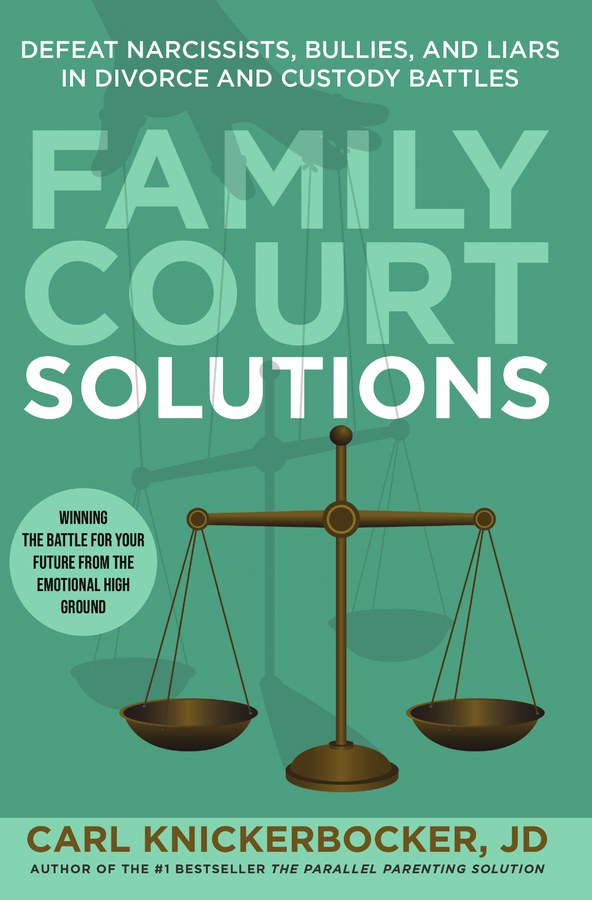
This is why so much of Family Court Solutions is dedicated to making the mechanism legible. Once you actually understand how integrity becomes leverage, it stops feeling like sacrifice and starts feeling like strategy. The protective parent who internalizes this is much harder to dislodge from the discipline.
The bottom line
Cleaner hands win in family court more often than dirtier hands do, because the system — for all its flaws — is built around evaluating credibility, conduct, and child-focus. Those are the metrics integrity pays into directly. Every shortcut you take to "match" the other side's tactics is a withdrawal from the account you most need full when the case reaches its decisional moment.
Stay clean. Stay disciplined. Stay strategic. Let the other side keep doing what they were always going to do. The math runs in your favor over time, if you can hold the discipline long enough to let it.
Want the full playbook?
This article is adapted from Family Court Solutions by Carl Knickerbocker, JD — the therapist-recommended, attorney-written guide to defeating narcissists, bullies, and liars in divorce and custody battles.
Get the Book