One of the strange features of high-conflict family law cases is that the very personality traits that make these cases miserable to litigate are often the same traits that destroy the high-conflict party on the witness stand.
If you understand how these personalities work, you can anticipate their courtroom behavior with surprising accuracy. And if your attorney understands it, the cross-examination of your high-conflict ex can become one of the most productive moments in the entire case.
This article is general legal education, not legal advice. Cross-examination strategy depends entirely on jurisdiction, judge, facts, and counsel. Work with an experienced family law attorney.
Why HCPs are dangerous witnesses (for themselves)
High-conflict personalities have several traits that work against them in a courtroom setting:
They cannot tolerate being challenged
Cross-examination is, by design, a process of challenging a witness's narrative. For most witnesses, this is uncomfortable but tolerable. For HCPs, being challenged in front of an audience activates the deepest part of the personality structure — the part that experiences contradiction as existential threat.
A skilled cross-examiner can ask questions that, on their face, are quite mild — and watch the witness escalate, become combative, lecture the lawyer, lecture the judge, and ultimately reveal the personality structure that drove the conflict in the first place.
They cannot resist explaining
Most witnesses, when asked a yes-or-no question, answer yes or no. HCPs cannot. They have to explain. They have to provide context. They have to defend themselves preemptively. They have to make sure the court understands the real story.
This is gold for cross-examination, because every unsolicited explanation is more material — material that may contradict prior statements, may reveal facts the witness shouldn't have wanted to reveal, or may simply demonstrate the witness's inability to follow basic instructions.
They reflexively blame
Asked about any difficulty, problem, or failure, an HCP reflexively shifts blame to others — the other parent, the children's teachers, the doctors, the courts, the lawyers. The pattern is so consistent that an attorney who knows what they're doing can elicit it on demand. Watching a witness blame everyone in the world for problems in their family does not help that witness with the judge.
They contradict themselves
Because HCPs construct their narrative as needed in the moment — adapting to whatever they think will help in this exchange — they often contradict things they said earlier in the same testimony, things they said in deposition, things they said in written communications, or things they said to professionals who evaluated them.
A cross-examiner with the contradictory statements lined up can use them devastatingly.
They cannot maintain composure under sustained pressure
This is the big one. HCPs may present beautifully in the first ten minutes of testimony — confident, articulate, sympathetic. But sustained, methodical questioning erodes the composure. The mask slips. The contempt, the rage, the disregard for accuracy starts to leak through.
Many family law judges have seen this pattern many times. They know what they're watching when they watch it. The witness who starts polished and ends combative tells a story without the cross-examiner having to spell it out.
The strategic principles
Effective cross-examination of an HCP follows a few principles:
Lock down the narrative early
Get them to commit to specific factual claims early in the cross. Once committed, they will defend the claim even when contradictory evidence appears — because backing down is worse for them, psychologically, than being caught.
Use their own documents
Texts, emails, sworn affidavits, statements to professionals. HCPs have usually said many contradictory things across many channels. The cross-examiner's job is not to catch them in the contradiction emotionally — it's to put the contradictory documents in front of them, calmly, one at a time.
Stay relentlessly polite
The HCP wants you to escalate. They want a fight. They want to look like the victim of a hostile lawyer. The most damaging cross-examination of an HCP is conducted in an unwaveringly calm, polite, almost gentle tone. The contrast with the witness's escalating affect tells the entire story.
Let them talk
Most cross-examination training tells lawyers to keep tight control of the witness. With an HCP, controlled openings — spaces where the witness is allowed to over-explain, lecture, or vent — are often the most damaging part of the testimony. The mask comes off in the unstructured moments.
End on the strongest contradiction
Whatever the most damaging documented contradiction is, save it for the end. The judge's last impression of the witness should be the moment they were most clearly caught.
Your job as the client
If you are the protective parent in this case, your role is not to cross-examine. Your role is to make your attorney's cross-examination devastating. That means:
- Bring the documents. Every text, email, voicemail transcript, social media post, and written statement that contradicts something the other side has claimed. Organized chronologically.
- Identify the contradictions. You know your ex's story better than your attorney does. You know which claims have shifted over time. Map the contradictions explicitly — "in the deposition they said X, in the affidavit they said Y, in the parenting plan they said Z."
- Identify the triggers. What makes your ex defensive? What topics produce escalation? Your attorney needs to know which doors lead to the witness's worst moments.
- Stay out of the way. Your job during cross-examination is to sit still, take notes, and be the calm, credible parent in the room. Whatever you do, do not react visibly. The judge is watching you too.
Why this matters
Most family court cases are not won by dramatic moments. They are won by patient, well-prepared presentation of evidence over time. But cross-examination is one of the few moments when the underlying personality dynamics of the case become visible to the judge in real time. A protective parent who has prepared their attorney well for this moment can compress months of patient documentation into a single afternoon of testimony.
The HCP does most of the work. Your job is to make sure your attorney is in position to let them.
Want the full playbook?
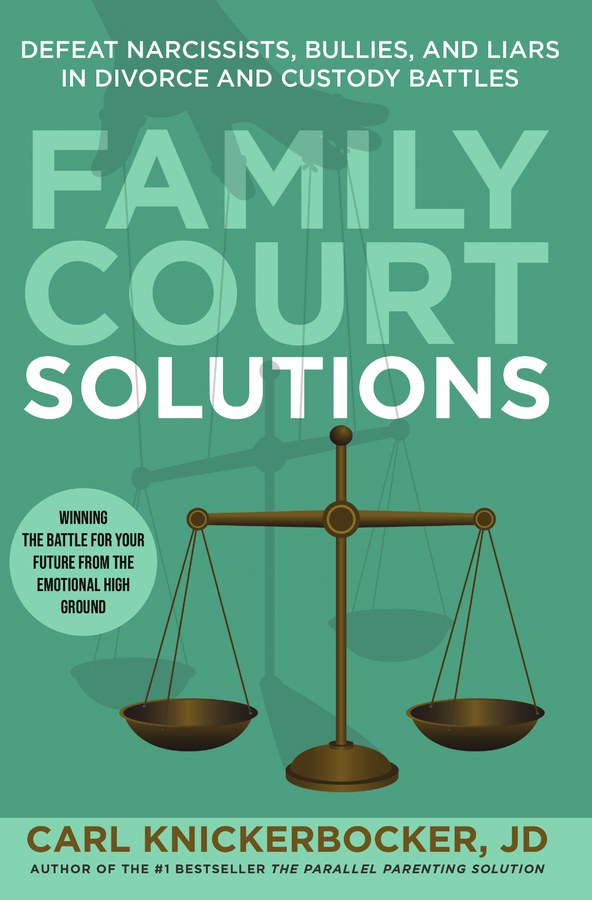
This article is adapted from Family Court Solutions by Carl Knickerbocker, JD — the therapist-recommended, attorney-written guide to defeating narcissists, bullies, and liars in divorce and custody battles.
Get the Book