Parental alienation is one of the most painful experiences a protective parent can endure — and one of the most difficult to address in family court. The pace of the legal system is glacial. The damage to the parent-child relationship is fast. Even when alienation is real, even when it's documented, even when the court eventually acts, the protective parent has often lost months or years of relationship with their child that cannot be reclaimed.
This article is not going to fix that pace. What it can do is give you a clearer picture of what alienation looks like, what's worth documenting, and what kinds of court intervention are actually achievable — so that whatever time you have is spent on the moves that matter.
What alienation is and isn't
Parental alienation, in its operational definition, is a sustained pattern of behavior by one parent designed to damage the child's relationship with the other parent. It is not a child who is reasonably upset with you about a specific thing you did. It is not a teenager going through a difficult phase. It is not a child whose preferences shift naturally over time as they get older.
Alienation is a pattern. The specific behaviors include:
- Speaking negatively about you in the child's presence — subtly, persistently, in ways the child internalizes
- Sharing inappropriate adult information about the case, finances, or the marriage with the child
- Interfering with visitation, calls, communication — "she had a stomachache," "he didn't feel like talking"
- Creating loyalty conflicts — making the child feel that loving one parent betrays the other
- Rewriting shared history — presenting the child with a revised narrative of family events
- Using the child as a messenger, spy, or therapist
- Subtly punishing the child for warmth toward the other parent
- Coaching the child on what to say to therapists, GALs, or the court
One or two of these in isolation may be poor judgment. The cumulative pattern, sustained over months and years, is alienation.
Why courts are slow to act
A few realities to be honest about:
The diagnostic category is contested
"Parental alienation syndrome" as a clinical diagnosis is not recognized by the major diagnostic manuals. The behavior is real; the diagnostic label is contested. This means a court will not necessarily accept a clinical "parental alienation" finding as the basis for relief. What the court will respond to is documented behavior and its documented effects.
Courts are wary of misuse
The alienation claim is sometimes deployed by abusive parents against protective parents whose children are reasonably afraid of them. Courts have seen this misuse and are appropriately cautious. The legitimate alienation case has to be made carefully and substantiated thoroughly to overcome that judicial caution.
Children's stated preferences are treated carefully
A judge cannot simply put a 9-year-old on the stand and ask whether they are being alienated. The reliability of a child's stated views in a high-conflict custody case is, by judicial training, treated as unreliable. This is frustrating when your child is repeating coached statements verbatim. It is also a feature, not a bug, of the system — a judge who took every child's stated preference at face value would do enormous damage in cases where the child has been coached.
Relief is slow and incremental
Even in cases where alienation is found, the standard response is not what you would want. It's not "the alienating parent loses custody." It is typically therapy, structured contact, parenting coordinator involvement, and gradual escalation only if interventions fail. The protective parent rarely gets the satisfying outcome they imagine.
What's worth documenting
If alienation is happening, documentation should focus on the behaviors that the court can actually respond to:
Interference with contact
Every missed call. Every cancelled visit. Every "she's busy," "he's not feeling well," "they don't want to talk right now." Document with dates, times, channel of attempted contact, and the response. A six-month pattern of contact interference is something a judge can rule on.
Coached statements
When your child uses adult vocabulary or repeats specific accusations word-for-word that mirror the other parent's filings, document it. "Mommy says you don't pay child support" from a 7-year-old who could not possibly know this independently is data. Note the date, what was said, and the context. Do not interrogate the child. Do not record the child. Note it in your own contemporaneous journal.
Inappropriate information sharing
Evidence that your child has been told adult things about the case: the contents of motions, financial details, accusations against you. Sometimes this comes out in a casual statement. Sometimes a therapist mentions it. Sometimes the child's school counselor notes it. Document the source.
Schedule manipulation
Activities scheduled for your parenting time without notice or consultation. Doctor's appointments scheduled to conflict with your visitation. School events the other parent didn't tell you about. Each is small. The pattern is large.
Third-party observations
Teachers who notice the child says different things about you in different settings. Therapists who can observe shifts in the child's reported views. Coaches, neighbors, family members. These are the witnesses whose observations can corroborate a pattern you would otherwise have to assert alone.
What not to do
- Don't interrogate the child. The child is not your witness. Putting them in the middle of an inquisition about what the other parent said makes the alienation worse, not better.
- Don't bad-mouth the other parent. Even when you're right. Even when they've earned it. Your child does not benefit from hearing it, and any of it will end up in a filing against you.
- Don't record the child without legal advice. Recordings of children in custody disputes often backfire badly — both legally (in some jurisdictions) and in front of a judge.
- Don't withhold support or visitation in retaliation. Tempting. Disastrous.
- Don't catastrophize publicly. Social media posts about "what's being done to my child" become exhibits. Vent privately. Document publicly only in your case file.
The interventions that actually exist
Depending on jurisdiction, the available interventions when alienation is alleged include:
- Reunification therapy — structured therapeutic contact aimed at rebuilding the parent-child relationship, often with a court-appointed therapist
- Parenting coordinators — neutral third parties who manage day-to-day disputes and can flag concerning behavior to the court
- Therapeutic supervised visitation — structured contact with a therapeutic professional present
- Modification of custody orders — in severe documented cases, shifting custody primarily to the alienated parent (rare, slow, and only after lesser interventions fail)
- Family Bridges and similar programs — intensive reunification programs available in some jurisdictions
Discuss specifically with your attorney which of these are available in your jurisdiction and which fit your fact pattern. Be realistic about the pace. Be relentless about the documentation.
The long view
Alienation cases are among the hardest. The pace mismatch between the harm and the legal response is brutal. The protective parent's job is to hold the line: stay present in the child's life to whatever degree is possible, document patiently, avoid the moves that hand the other side ammunition, and trust that children, over time, often come to see their family more accurately than the alienating parent's narrative would predict.
That is cold comfort in the months when your child won't take your call. It is true anyway.
Want the full playbook?
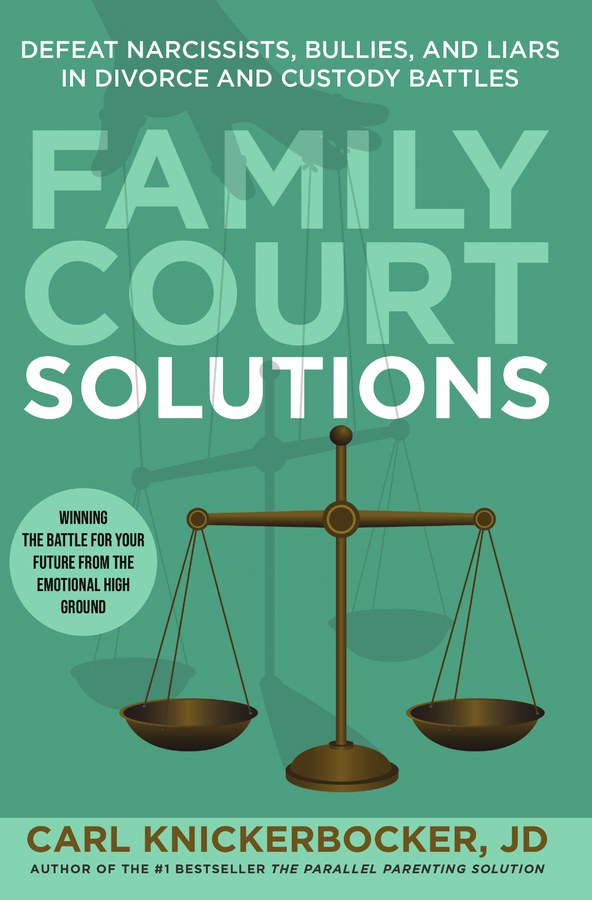
This article is adapted from Family Court Solutions by Carl Knickerbocker, JD — the therapist-recommended, attorney-written guide to defeating narcissists, bullies, and liars in divorce and custody battles.
Get the Book