A false report to Child Protective Services (CPS) — or its equivalent in your jurisdiction, sometimes called DCF, DSS, or ACS — is one of the most damaging weapons available to a high-conflict ex. The investigation alone can be traumatizing for your children, expensive for you, and devastating to your reputation. The fact that the report is ultimately unfounded does not always mean the consequences disappear.
This article explains what to do when a false report is filed, how the investigation typically works, and how to keep the report from becoming a custody weapon. Procedures vary substantially by state and agency; this is general guidance, not jurisdiction-specific legal advice.
Why HCPs make false reports
Several reasons, none of them good:
- Tactical leverage. An open CPS investigation creates instant pressure on the targeted parent and shifts custody dynamics, sometimes overnight.
- Reputation damage. Even an unfounded report becomes ammunition — "CPS is investigating him" — in social circles, with the children's school, with the courts.
- Resource depletion. Responding to a CPS investigation costs time, legal fees, and emotional bandwidth.
- Projection. Sometimes the reporting parent is projecting their own conduct — reporting you for the very behavior they engage in.
- Belief. Some HCPs genuinely believe their distorted version of events and make reports in subjective good faith on objectively false claims.
Understanding the motivation doesn't change your response, but it helps you stay grounded about what is actually happening.
The first 24-48 hours
When a CPS investigator contacts you — usually by phone or by appearing at your door — the response that protects you most is:
Be cooperative and polite
Hostility, even justified hostility, will hurt you. CPS investigators have heard "this is a false report from my ex" countless times. They will evaluate your conduct, your demeanor, and your willingness to cooperate. Be respectful. Be courteous. Take the time to engage with the process. Do not turn them away at the door.
But do not consent to anything without thinking
Investigators may ask to enter your home, interview your children, take photos, or have you submit to drug testing. You have rights regarding each of these. The way to assert those rights while remaining cooperative is to say, calmly: "I want to cooperate fully with your investigation. Before I [agree to that / sign that / let you interview my child without me present], I'd like to consult with my attorney. Can I call you back within 24 hours to confirm next steps?"
Call your attorney immediately
Before any substantive interview, before letting anyone into your home for an inspection, before any drug test, call your family law attorney. If your family law attorney does not have CPS experience, ask them for a referral. Many jurisdictions have specialized CPS defense practices.
Do not contact your ex
Especially do not contact them in anger. Especially do not text them to demand they retract. Anything you say will be used in the investigation, in the custody case, or both. If communication is necessary, route it through your attorney.
Do not coach the children
Do not tell the children what to say. Do not tell them not to talk to the investigator. Do not warn them that "Mommy is trying to take you away from Daddy." This will surface in interviews. It will destroy you. Children get the lightest possible version of the truth: that someone is going to talk to them to make sure they are safe, they should answer honestly, and there are no wrong answers.
How investigations typically work
Procedures vary by jurisdiction, but the general structure tends to include:
- Initial intake. The agency receives the report and decides whether it meets the threshold to investigate. Some reports are screened out at intake.
- Investigator assignment. A caseworker is assigned. They typically have a defined timeframe (often 30-60 days) to complete the investigation.
- Contact with you and the children. The investigator interviews each parent and the children. Often interviews of children happen at school or in a forensic interview center, not at home.
- Collateral contacts. The investigator may speak with teachers, doctors, therapists, neighbors, daycare providers — people who have observed the family.
- Home visit. Often required. The investigator wants to see where the children live and how they are cared for.
- Findings. The investigator issues findings — typically "unfounded," "inconclusive," "indicated," or "founded" (terminology varies). An unfounded or inconclusive finding closes the case; founded findings can trigger further action.
Most false reports end in "unfounded" findings. The investigation itself is the punishment the HCP was aiming for.
What to provide
Once you've consulted with your attorney, you'll typically be cooperating fully with the investigation. Materials and access that may help:
- Medical records showing your child's recent care, vaccinations, and well-child visits
- School records, attendance, behavioral notes, teacher contacts
- Therapy records, if applicable
- Contact information for collateral witnesses — people who know your parenting
- Access to your home for inspection
- Documentation of the custody arrangement and any prior court orders
- Any evidence relevant to the specific allegations (text messages, calendars, etc.)
- Drug test results if drug use has been alleged (sometimes worth doing voluntarily; sometimes worth waiting to be requested — ask your attorney)
What you do not provide: extensive narrative about how terrible your ex is, demands that they be investigated, demands that the case be closed immediately. The investigator's job is to investigate, not to adjudicate your custody case.
Protecting the case file
The CPS investigation will produce records. Those records may be subpoenaed or otherwise discoverable in the custody case. You want the record to reflect a parent who cooperated fully, presented credibly, and whose home and conduct withstood scrutiny.
This means:
- Every interaction with the investigator should be documented — date, who, what was discussed, what was provided
- If there are mischaracterizations in any preliminary findings, document them and have your attorney address them
- Request copies of the final findings in writing
- If the case is closed as unfounded, keep that finding accessible — you may need it for the custody case
Using an unfounded report in the custody case
If a CPS report is closed as unfounded, this is potentially important evidence in the custody case — both that you were investigated and exonerated, and that your ex made a report that was found to be unsubstantiated.
Discuss with your attorney whether and how to deploy this. The strategic options usually include:
- Including the unfounded finding as exhibits in opposition to whatever motions the other side has filed
- Using the report as evidence of bad-faith litigation conduct by the other parent
- Pursuing sanctions or fee awards if the report was demonstrably false and made for tactical purposes
- Documenting the pattern, if there have been multiple false reports
If the report is genuine
This article assumes a knowingly false report. If you are reading this and there is actually a legitimate concern that your conduct, or your home, or your substance use, creates risk for your children — the response is different. Cooperate, address the underlying issue genuinely (treatment, parenting support, whatever is appropriate), and discuss with your attorney how to manage the case openly. Denial in the face of genuine concerns is the worst possible posture. Engagement with the concern is the only path back to credibility.
The long view
A false CPS report is a serious tactical blow, and there is no version of it that doesn't hurt. The aim is not to make it not hurt. The aim is to make it not hurt your case. Cooperative, calm, well-documented engagement with an investigation that ends in an unfounded finding does that. So does a custody record that, in the months after, continues to show exactly the kind of parent the report falsely accused you of not being.
Want the full playbook?
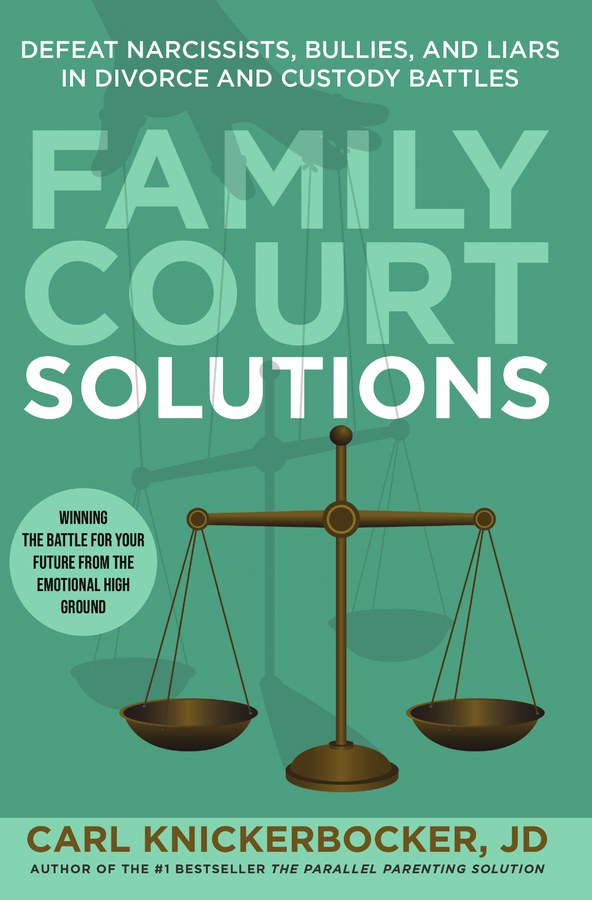
This article is adapted from Family Court Solutions by Carl Knickerbocker, JD — the therapist-recommended, attorney-written guide to defeating narcissists, bullies, and liars in divorce and custody battles.
Get the Book