A custody evaluation is one of the most consequential events in many high-conflict family law cases. The evaluator's recommendations carry significant weight with the court, sometimes dispositive weight, and the evaluation process itself spans weeks or months of intense scrutiny. How you handle it matters.
This article describes what evaluators look for, the worst mistakes parents make during the process, and how to present authentically rather than performing.
What a custody evaluation actually is
A custody evaluation is a structured psychological and parenting assessment conducted by a mental health professional — usually a psychologist or licensed clinical social worker — appointed by the court or selected by the parties. The evaluator gathers data through a defined set of methods and produces a written report with recommendations to the court regarding custody, parenting time, and related issues.
A typical evaluation includes:
- Clinical interviews with each parent, often multiple sessions
- Psychological testing (commonly the MMPI, MCMI, or other validated instruments)
- Interviews with children, individually and in age-appropriate formats
- Observations of each parent with the children
- Home visits
- Interviews with collateral sources — teachers, therapists, doctors, sometimes family members
- Review of the case file, including filings, exhibits, and prior orders
The total cost of a full custody evaluation often runs into the thousands or tens of thousands of dollars, with the parties typically splitting the cost. The evaluator's qualifications, methodology, and conclusions are themselves evidence; the report and the evaluator can be cross-examined at trial.
What evaluators are actually looking for
Despite the clinical instruments and structured methodology, the core questions an evaluator is trying to answer are practical:
- Which parent demonstrates parenting capacity adequate to the children's needs?
- Which parent supports the children's relationship with the other parent?
- Is there evidence of personality features or psychopathology that meaningfully affect parenting?
- How do the children present in each parent's care?
- Which parent's account is most consistent with collateral data?
- Are there safety concerns — substance use, violence, untreated mental illness, alienating behavior?
An evaluator's report is structured around answering these questions on the basis of the data they gather. Your job during the evaluation is to give them an accurate picture of who you are as a parent.
The worst mistakes parents make
Performing instead of being
The parent who arrives at the home visit with a freshly baked pie, the house staged like a magazine, and the children in matching outfits is performing. Evaluators see this constantly. They are not impressed. They are watching for what happens when the performance slips — how you respond when one of the children acts up, what your default tone with the kids is, how you handle a small frustration. The performed perfection signals exactly the parent the evaluator should worry about.
Trying to manipulate the test results
The personality tests used in custody evaluations — the MMPI is the most common — have built-in validity scales that detect deliberate attempts to look good or look bad. Trying to "appear well-adjusted" by answering the way you think a healthy person would answer typically produces a "fake good" elevation that calls your entire profile into question. Answer honestly. Surprising as it sounds, an honest profile with some elevated scales tends to look more credible than a "perfectly healthy" profile.
Trash-talking the other parent
Volunteering extended criticism of the other parent — especially adjectives rather than incidents — signals conflict-focus, not child-focus. The evaluator will form their own view of the other parent through their own work. Your job is to provide documented incidents when asked, not to make the case against your ex on the evaluator's couch.
Coaching the children
Evaluators are highly trained to detect coaching. Children who use adult vocabulary, repeat phrases verbatim, or respond to open-ended questions with rehearsed scripts are immediately flagged. Coaching may help with a specific interview question; it will destroy your credibility with the evaluator entirely.
Hiding information that will come out anyway
The DUI from eight years ago. The brief therapy episode after the affair. The disciplinary action at work. Whatever it is — if it will surface through records, collateral interviews, or the other parent's filings, you should disclose it early, briefly, and matter-of-factly. A disclosed-and-contextualized issue is much less damaging than the same issue discovered after you concealed it.
Fighting the evaluator
If you disagree with something the evaluator says or asks, do not argue. Provide your perspective once, calmly, with supporting facts. Then move on. Combativeness during an evaluation reads as the very dysregulation the evaluator is screening for.
How to prepare
Get familiar with the evaluator's process
Many evaluators publish or share their methodology. Your attorney may know the evaluator's typical approach. Understand the structure before you walk in.
Sleep, food, and regulation in the days before
You will be evaluated as you present. Show up regulated. Don't pull all-nighters reviewing your case file. Don't cram. Take care of your body and your nervous system the way you would before any high-stakes day.
Have your collateral list ready
Most evaluators ask for a list of people they can contact — teachers, therapists, doctors, family friends, neighbors. Have a thoughtful list ready. People who have actually observed you parenting, who can speak to specific incidents or routines. Not people who will simply tell the evaluator how great you are.
Don't review your case file the night before
You are not being evaluated on whether you can recite the procedural history. You are being evaluated on your parenting and your psychological functioning. Cramming will not help. Genuine recall of meaningful incidents will.
For the home visit: be normal
Clean, but not staged. Have the household routines you actually have. Have the food you actually eat. Let the children behave the way they actually behave. Evaluators are looking for the real version of your home, and they have seen enough staged versions to spot the difference.
During the interviews
Be specific
Vague generalities ("we have a great relationship," "he's a wonderful kid") give the evaluator nothing to work with. Specific incidents and routines — what you actually did this morning, the specific way your son handles transitions, the specific challenge your daughter is working through in third grade — communicate that you actually know your children.
Show insight
Evaluators value parents who can describe their own strengths and weaknesses, who can acknowledge their contribution to family difficulties, and who can articulate what they are working on. The parent who claims to have no flaws and bears no responsibility for any family conflict raises immediate concerns.
Show child-focus
When asked about the case, the children, or the future, frame your answers around the children's needs and well-being, not your grievances or your strategic goals. This is not about performing child-focus. It is about whether your actual thinking is centered there. Evaluators can usually tell the difference.
After the report
If the report is unfavorable, do not panic and do not lash out at the evaluator. Discuss with your attorney whether to: (1) accept the recommendations as the basis for settlement, (2) challenge specific findings through cross-examination at trial, (3) commission a critique or rebuttal from another expert. Each path has costs. The right choice depends on the specific findings, the strength of your underlying case, and the relevant strategic considerations.
If the report is favorable, do not relax. The other side may move to challenge it, and the case still has to be tried. Your job is to keep being the parent the report described.
Want the full playbook?
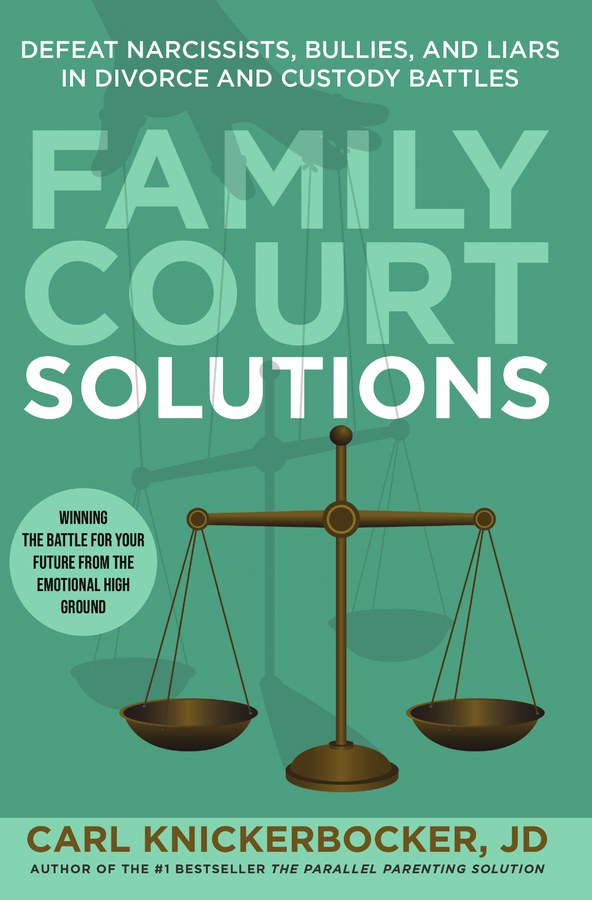
This article is adapted from Family Court Solutions by Carl Knickerbocker, JD — the therapist-recommended, attorney-written guide to defeating narcissists, bullies, and liars in divorce and custody battles.
Get the Book