The single most consequential decision in your case is probably the choice of attorney. Get this right and a lot of other mistakes become survivable. Get it wrong and almost no amount of personal preparation can compensate.
This article is about how to choose well. It is not about which attorney to hire — that's a jurisdiction-specific, case-specific question only you can answer. It's about the traits, experience, and fit that actually matter when your case is the kind of case it is.
The wrong reasons to choose an attorney
Most protective parents pick their first attorney quickly, under stress, on one or two factors that turn out not to matter as much as they thought. The most common mistakes:
Aggressiveness alone
The "pit bull" lawyer, the one who promises to "destroy" the other side, the one whose website features battlefield imagery. In a normal divorce, an overly aggressive lawyer just runs up bills. In a high-conflict case, they actively make things worse — matching the other side's escalation cycle, providing ammunition, and reinforcing the "both sides are difficult" framing you most need to avoid.
Price alone
The cheapest attorney is rarely the best deal. High-conflict cases consume hours. An attorney who is cheap but slow, distracted, or junior will cost you more in lost ground than a more expensive attorney who handles the case efficiently. The right framing is "cost per outcome," not "cost per hour."
The big-name firm
Brand reputation is real but it does not automatically transfer to your specific case. A famous firm may assign you to a junior associate who is learning on your file. A solo practitioner with deep family-law experience may serve you much better. Hire the lawyer, not the letterhead.
Personal chemistry alone
You should be able to work with your lawyer. But "I clicked with them in the consultation" is not a substitute for "they have the right experience." Some excellent attorneys are not charming. Some charming attorneys are mediocre lawyers.
A friend's recommendation from a normal case
Your friend's divorce was probably nothing like yours. Their lawyer was right for their case. That is not evidence the same lawyer is right for yours.
What actually matters
Specific experience with high-conflict cases
Ask directly: "What percentage of your cases involve a high-conflict opposing party?" Listen for specifics. Lawyers who actually work these cases have a vocabulary for them — they can talk about narcissistic litigation patterns, weaponized motions, alienation cases, parenting coordinators, GAL dynamics. Lawyers who don't will get vague or generic.
Trial experience that matches your likely path
If your case is going to trial — and many high-conflict cases do — you need a lawyer with real trial experience. Ask how many family law trials they have first-chaired in the past three years. Settle-everything lawyers are not who you want if the other side won't settle.
Familiarity with your jurisdiction and bench
Family court culture varies enormously across jurisdictions and judges. An attorney who knows the local bench, the local custody evaluators, the local GALs, and the local parenting coordinator pool has knowledge that does not transfer. In a contested case, that local knowledge is worth a lot.
Strategic temperament, not just aggressive temperament
The right lawyer can be calm when calm serves you and aggressive when aggression serves you — and can tell the difference. They are not running an "always escalate" or "always concede" strategy. They are matching tactic to circumstance.
Communication style
Ask how they communicate with clients. How quickly do they typically return emails? Who handles routine questions — them or staff? How are they reached in an emergency? Most client dissatisfaction in family law is about communication, not outcomes. Find someone whose communication style matches what you need.
Willingness to coach you, not just represent you
In high-conflict cases, the client's between-hearing behavior is often dispositive. The right attorney will coach you on documentation, on communication with your ex, on what to say to professionals involved in the case, on how to behave in court. If the attorney's posture is "let me handle the legal side, you handle your life," that is not what high-conflict cases require.
The consultation questions
Before you hire anyone, do paid consultations with at least two or three candidates. Bring a one-page case summary — the facts, the procedural posture, the issues. Ask each lawyer the same questions:
- What percentage of your cases involve high-conflict opposing parties?
- What family law trials have you done in the past two years?
- How do you typically structure documentation expectations for clients in cases like mine?
- What's your view of [a specific issue in your case]? What would your initial strategy be?
- Who else will be working on my case, and what will they handle?
- What's your communication policy — response times, who handles what, billing for emails?
- What's your retainer, your hourly rate, and your estimated cost range for a case like mine?
- Have you worked with [specific judges / GALs / evaluators likely to be involved in your case]?
- What would you need from me, between hearings, to be most effective in court?
The right attorney will answer these specifically, without generic deflection. They will also ask you sharp questions back — about the facts, the procedural history, your goals. A consultation that is mostly a sales pitch from their side is not a good sign.
Red flags during a consultation
- Promising specific outcomes ("I can get you full custody")
- Trash-talking opposing counsel or local judges
- Vagueness about experience, fees, or process
- Pressure to sign immediately
- Dismissiveness about high-conflict dynamics — "every divorce is high-conflict"
- Not asking you any substantive questions
- Recommending tactics that would compromise your integrity (recording, lying, withholding visitation)
When to change attorneys
Sometimes the right move is firing the lawyer you have. This is hard, expensive, and disruptive — but worth it in the right circumstances. Signs that a change may be warranted:
- Persistent failure to communicate
- Missed deadlines or unprepared appearances
- An adversarial relationship with your goals (they don't believe you, don't take you seriously, or actively push against your stated objectives)
- A pattern of unfavorable outcomes that other attorneys in consultation indicate were avoidable
- A loss of confidence that cannot be repaired through conversation
Do not change attorneys mid-trial or in the immediate run-up to a critical hearing. Otherwise, if the relationship is genuinely broken, the cost of switching is almost always less than the cost of staying.
The relationship
Once you have the right attorney, your job is to be the kind of client they can work with: organized, responsive, disciplined, honest (especially about facts that hurt your case), and willing to follow their strategic advice even when your instinct disagrees. The best attorney in the world cannot win a case for a client who is fighting them at the same time they are fighting the opposing party. Pick well, then trust the pick.
Want the full playbook?
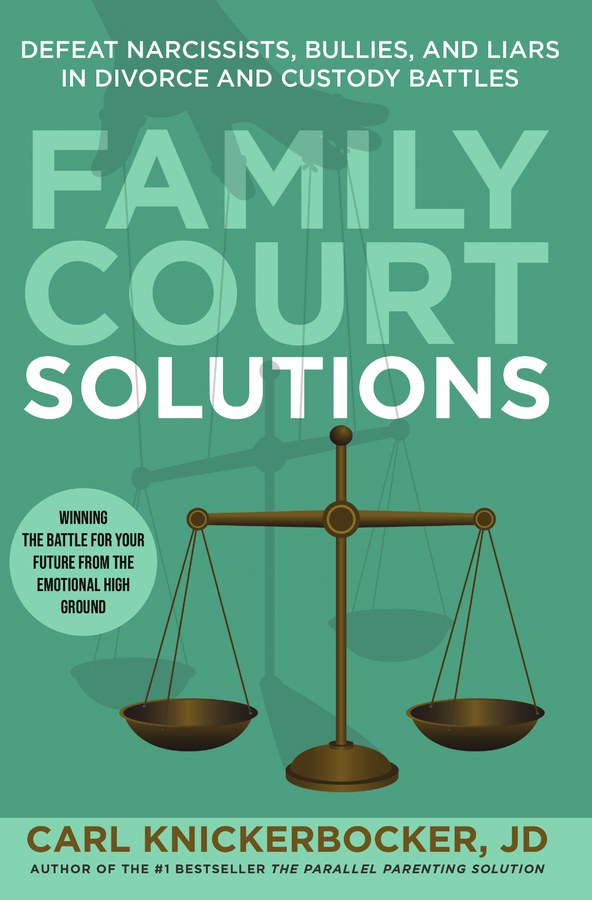
This article is adapted from Family Court Solutions by Carl Knickerbocker, JD — the therapist-recommended, attorney-written guide to defeating narcissists, bullies, and liars in divorce and custody battles.
Get the Book